このサイトはアフィリエイト広告によって運営されています
This web site contains affiliate promotions.
NURO Hikari vs. SoftBank Hikari: Choosing the Right Internet in Japan Without Regrets

|

|

|

“I heard NURO Hikari is super fast, but at my home it was terrible…”
“I switched to SoftBank Hikari, but at night it barely connects at all…”
You can often find reviews like this online.
The truth is, with fiber internet in Japan, the experience really depends on the person and the place. Some people get excellent results, while others run into big problems.
If you only trust the reputation or the “maximum speed” numbers shown in ads, you might fall into an unexpected trap.
In this article, we don’t just compare NURO Hikari and SoftBank Hikari side by side.
We’ll also explain why people sometimes fail when choosing an internet provider, and how you can avoid those mistakes.
To make sure you avoid any regrets with your internet contract, we’ve highlighted the three most important points you need to know before signing up.
By the end of this article, you’ll clearly understand which service fits you best, with an easy-to-follow summary of their key features. We’ll also walk you through NURO Hikari and SoftBank Hikari’s official promotions—including discounts, cashback offers, free installation, and other exclusive benefits.
Softbank HIKARI Official Web Site(Check availability, only Japanese)

NURO HIKARI Official Web Site(Check availability, only Japanese)

1. Easy NURO Hikari vs. SoftBank Hikari Comparison Table
For those who are unsure which fiber internet to choose, we’ve made a clear comparison of NURO Hikari and SoftBank Hikari.
We’ve summarized the monthly fees and campaign(promotional) benefits so you can quickly understand the differences.
First, let’s check the basic points side by side.
| Item | NURO Hikari | SoftBank Hikari |
|---|---|---|
| Monthly Fee (Apartment) | 2 Gbps: 3,850 yen 10 Gbps: 4,400 yen |
1 Gbps: 4,180 yen 10 Gbps: 6,380 yen + device 500 yen |
| Monthly Fee (House) | 2 Gbps: 5,500 yen 10 Gbps: 6,050 yen |
1 Gbps: 5,720 yen 10 Gbps: 6,380 yen + device 500 yen |
| Speed Plans | 2 Gbps / 10 Gbps | 1 Gbps / 10 Gbps |
| Cashback & Campaign(promotional) Benefits |
House: 90,000 yen Apartment: 60,000 yen Installation fee: effectively free (49,500 yen discount) What is "effectively free"? |
25,000 yen Installation fee: effectively free(31,680 yen discount) |
| Installation Fee | 49,500 yen | Depending on equipment: 4,620 yen or 31,680 yen |
| Home Gateway Fee | Free | 500 yen/month (for 10 Gbps plan) |
| Promotion page | NURO Hikari Official Site
|
SoftBank Hikari Official Site
|
Guide to Smarter Contract: NURO HIKARI(NURO光)
Guide to Smarter Contract: SoftBank HIKARI(SoftBank 光)
The Trick Behind “Free Installation Fee”
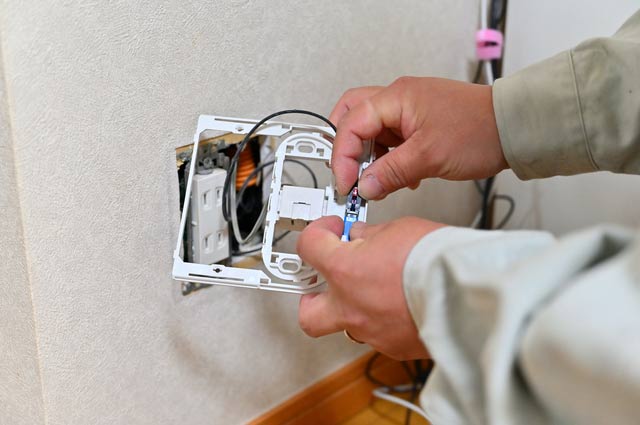
With NURO Hikari, SoftBank Hikari, and many other fiber internet services in Japan, you’ll often see the phrase “installation fee effectively free.”
But there’s a catch hidden in the word “effectively.” It’s important to understand how this system really works.
The basic idea is simple: the provider charges you a monthly installment of the installation fee, but at the same time they give you a discount for the exact same amount.
As a result, it looks like you are paying the fee, but the discount cancels it out, so the total comes to “zero.”
Example with NURO Hikari:
- Standard installation fee: 49,500 yen
- Charged in 36 monthly installments (1,222 yen per month)
- At the same time, you get a 1,222 yen discount every month for 36 months
(Note: In the first month it’s 1,230 yen charged and 1,230 yen discounted)
Example with SoftBank Hikari:
- Standard installation fee: 31,680 yen
- Charged in 24 monthly installments (1,320 yen per month)
- You receive a 1,320 yen discount each month for 24 months
- If the fee is only 4,620 yen, it’s split into 1,155 yen × 4 months with the same discount
⚠️ Important to know:
If you cancel your contract before all the installments are finished, the discounts will stop, but you’ll still have to pay the remaining installation fees.
This means part of the cost will come out of your own pocket.
So while it’s called “effectively free,” the system assumes you’ll keep using the service for the full discount period.
If you think you might cancel early, be careful with this kind of offer.
Two Types of Installation Fees for SoftBank Hikari! Which One Applies: 4,620 yen or 31,680 yen?
Did you know that SoftBank Hikari actually has two different installation fees?
On the official website
, you’ll see the phrase “installation fee effectively free.”
But when you think about the risk of paying the remaining balance if you cancel early, it’s safer if the total installation fee is as low as possible.
| Installation Type | SoftBank Hikari Installation Fee*1 | Benefits |
|---|---|---|
| On-site installation | 31,680 yen | 1,320 yen × 24 months discount*2, *3 |
| No on-site installation | 4,620 yen | 1,155 yen × 4 months discount*2, *3 |
For SoftBank Hikari:
- If on-site construction work is required, the fee is 31,680 yen.
- If no on-site construction is required, the fee is only 4,620 yen.
So, when does no on-site construction apply?
The most common case is in apartment buildings that already have FLET’S Hikari equipment installed.
In this situation, your room may already be wired, so a technician may not need to visit.
However, even if no work is needed inside your room, often a technician still has to do switching work in the building’s shared facilities (such as the MDF box).
In reality, most cases are judged to require on-site construction.
That means paying only 4,620 yen is actually quite rare.
⚠️ Another important point:
The exact installation fee is not decided before you apply.
After you sign up, SoftBank checks the building’s equipment, and based on whether on-site work is needed, they decide the final fee.
So, to be safe, you should plan with the assumption that the 31,680 yen fee will apply.
Softbank HIKARI (Check availability, only Japanese)
2. Faster Installation: NTT Lines with SoftBank Hikari
SoftBank Hikari is what’s called a “fiber collaboration service” that uses NTT’s FLET’S Hikari lines (NTT is Japan’s largest telecom company).
In simple terms, it’s basically NTT’s fiber internet service bundled with the internet provider “Yahoo!BB.”
The big advantage is that NTT handles both the construction and activation of the line directly.
Since NTT prioritizes its own network, installation usually happens faster and more smoothly compared to other companies.
In many apartment buildings, the NTT equipment is often already installed.
In that case, only a quick switch-over is needed, and you may be able to start using the internet almost immediately.
By comparison, NURO Hikari also uses NTT’s fiber cables, but only the physical wires.
The rest of the network is run separately by So-net (Sony Network).
Because of this, NURO requires two separate construction visits:
- Inside your home by So-net
- Outside your home by NTT
Depending on the timing, it can take over three months from application until the service is ready.
NURO: What Exactly Happens During the Internet Installation Work?
? For anyone who wants to start using the internet quickly, SoftBank Hikari (which uses NTT’s network) is the faster and more reliable choice.
Softbank HIKARI (Check availability, only Japanese)
3. Which One Is Faster? 2 Gbps Isn’t Always Better
If we exclude the special 10 Gbps plans, the maximum advertised speed for SoftBank Hikari is 1 Gbps, while NURO Hikari offers 2 Gbps.
On paper, NURO looks faster.
However, internet speed in Japan (and in most countries) is provided on a “best effort” basis.
This means the actual speed you get depends heavily on your environment—such as building equipment, wiring quality, and even how busy the network is at night.
Because of this, it’s impossible to predict the real speed at your home before you sign a contract.
For example:
- Your friend might say, “NURO Hikari is super fast!”
- But when you install it in your apartment, you might feel, “It’s slower than I expected…”
So, don’t judge only by the advertised numbers.
The best choice depends on your own living environment and building conditions.
Be Careful with Apartments!
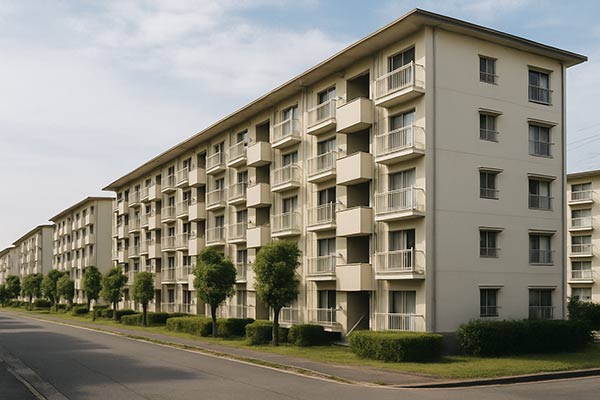
When signing up for SoftBank Hikari in an apartment, you need to pay attention to the type of wiring used in your building.
In some buildings, older wiring methods are used, such as:
- VDSL method (using telephone lines)
- LAN cable method (using shared LAN cables)
NTT: Installation Work and Wiring Methods in Apartment Buildings
With these, the maximum speed is limited to 100 Mbps, even if your contract says “1 Gbps.”
On top of that, the signal weakens easily, so in the evenings the speed can drop dramatically—sometimes to the point where the internet feels unusable.
On the other hand, if your building uses the fiber-to-the-room method (optical wiring directly to your unit), then SoftBank Hikari can provide high-speed internet.
If you see an NTT optical outlet (光コンセント) installed in your room, that’s a good sign your building uses this faster method.
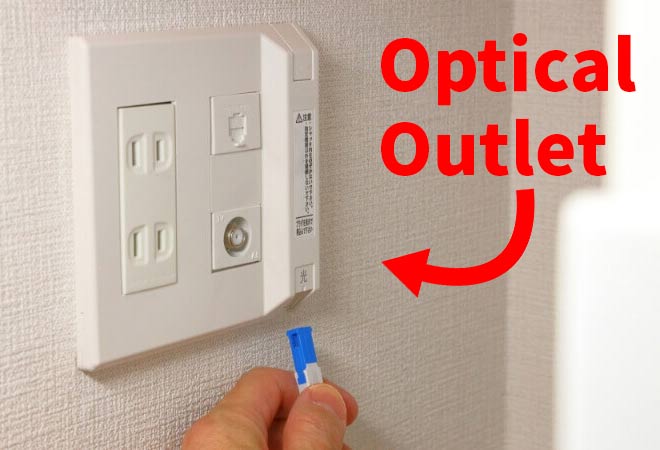
If you don’t see one, you can still check your wiring type by calling NTT at 116 (English support is sometimes available).
? With NURO Hikari, you don’t have to worry about this problem—all NURO connections are fiber-to-the-room.
That means there’s no risk of being stuck with old wiring that slows down your internet.
? If you live in an apartment, make sure to confirm the wiring type before signing a contract.
SoftBank Hikari Requires an IPv6 Router
SoftBank Hikari uses NTT’s FLET’S network, which separates the NTT line from the provider’s equipment.
Because of this setup, the connection point between the NTT network and the provider can easily become a bottleneck, causing slow speeds—especially during busy hours.
To solve this, SoftBank Hikari offers a system called “IPv6 High-Speed Hybrid” (IPoE with IPv4 over IPv6).
This allows the connection to bypass the bottleneck and gives you more stable, faster speeds.
⚠️ But here’s the catch:
To use this option, you must rent a special router called the “Hikari BB Unit.”
It costs an extra 513 yen per month.
If you sign up without knowing this, you may end up thinking, “Why is it slower than I expected?” That’s why it’s very important to confirm this before contracting.
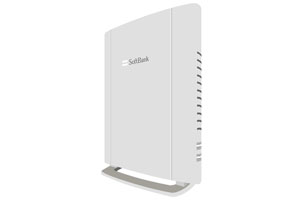
Softbank: IPv6 High-Speed Hybrid IPv6 IPoE + IPv4
On the other hand, NURO Hikari uses its own all-in-one network system (provider included).
Because of this, there is no bottleneck in the first place.
NURO supports IPv6 as well, but you don’t need any special options or extra devices to enjoy stable high-speed internet.
? In this sense, NURO Hikari is a simpler and less stressful choice.
NURO HIKARI Official Promotion Site
Softbank HIKARI Official Promotion Site
So, Which is Better: NURO Hikari or SoftBank Hikari?(Conclusion)
If you want quick installation without complicated construction
→ SoftBank Hikari
If you care most about speed
→ NURO Hikari
SoftBank Hikari is available in most parts of Japan and works with many apartment buildings.
Since it often does not require major construction, it’s a good choice if you want to start using the internet quickly. In some cases, service can be ready in as little as two weeks after applying.
On the other hand, NURO Hikari has a smaller service area.
In many apartments, extra construction work is required before you can use it.
Because NURO requires two separate installation visits (one by NTT and one by So-net), it can sometimes take up to three months to get connected.
If speed is your top priority, NURO Hikari is recommended.
Even though actual speeds vary, having a higher maximum speed usually gives you a better chance of faster internet.
NURO Hikari’s standard plan offers up to 2 Gbps, while SoftBank Hikari offers up to 1 Gbps, so in theory NURO can be faster.
However, both NURO Hikari and SoftBank Hikari offer 10 Gbps plans. Since the maximum speed is the same for both, if you want to sign up for a 10 Gbps plan, SoftBank Hikari is recommended if you prefer faster installation.
⚠️ Keep in mind: 10 Gbps plans are only available in limited areas.
Be sure to check availability on the official website by entering your postal code before applying.
You can check the service area for NURO Hikari directly from the application page
.
For SoftBank Hikari, please use the official SoftBank area check tool to confirm availability.
Official Promotions: Discounts and Cashback
Below are the official promotions for NURO Hikari and SoftBank Hikari. These benefits are only available if you sign up through the promotional web page linked below.
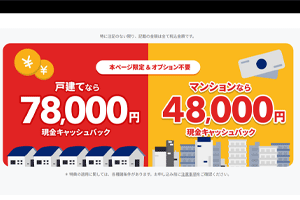
|
Monthly Charge
Fee Discount Cashback Amount
• Promotional web page: NURO HIKARI (Japanese only)
|
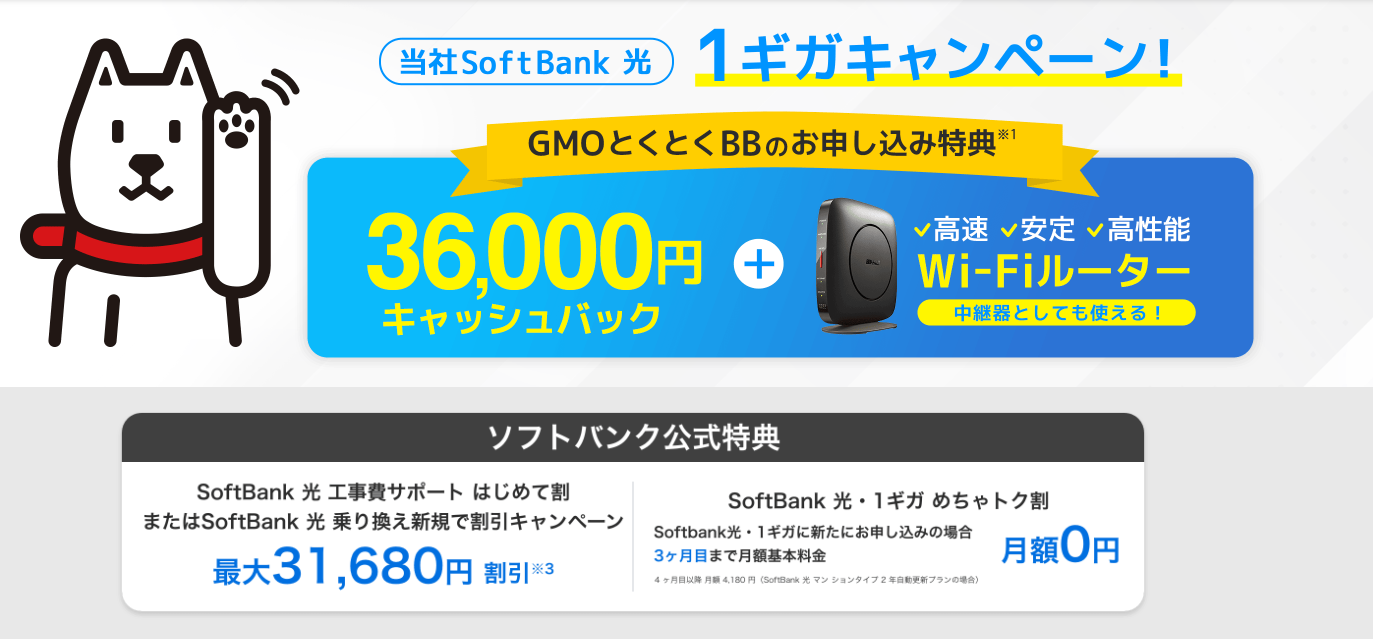
|
Monthly Charge Discount *Those are the prices if you divide 36,000yen cashback offered via this promotion and apply to monthly fees + If you switch your current internet service to Softbank HIKARI, SoftBank will pay all the cancellation fee.
• Promotional web page: Softbank HIKARI(Softbank光)
|
When it comes to cashback, NURO Hikari is far more generous.
For houses: you can get 90,000yen
For apartments: you can get 60,000 yen
And the best part is, these amounts are given unconditionally.
On the other hand, the official SoftBank Hikari campaign only offers a 25,000 yen cashback.
So if you compare just by cashback amount, NURO Hikari clearly gives you more.
As for installation fees, both NURO Hikari and SoftBank Hikari make them effectively free through discounts.
| NURO Hikari | Softbank Hikari | |
|---|---|---|
| Cashback | Houses:90,000yen Apartments: 60,000 yen |
25,000 yen |
| Other benefits | Free Installation (49,500 yen discount) *Effectively free |
Free Installation(up to31,680 yen) *Effectively free |
| Official Promotion Site | NURO Hikari
|
Softbank Hikari(Yahoo!BB)
|
|
|
|
|